
Champaign County Directory Shelves
Champaign County city directory research can start online or at a local reading room. The Urbana Free Library describes county coverage from 1870 to the present in city, telephone, and criss-cross formats. Its online books page points to scans from 1878 through 1950. The University of Illinois digitized Johnson's Urbana-Champaign directories extend roughly from 1878 through 1970 and include many outlying towns. The City of Champaign also links a detailed run of downloadable early volumes. These sources overlap, but none should be treated as one continuous series.
| Collection | Years | Where Held | Access |
|---|---|---|---|
| County city, phone, and criss-cross directories | 1870 to present | Urbana Free Library | Local-history collection and many online scans |
| Johnson's Urbana-Champaign regional directories | About 1878 to 1970 | University of Illinois digital library | Free online scans |
| Champaign directory downloads | 1878-79 to 1949-50, with gaps | City historic-preservation resources | Free online downloads |
| Directories, yearbooks, maps, and family files | Varies by collection | Champaign County Historical Archives | Research-room use and staff retrieval |
The city download list omits 1922, 1933, 1947, and 1948, among other breaks. A missing volume cannot prove that a resident was absent. Check the Urbana Free Library catalog, University of Illinois scans, Champaign County Historical Archives, and nearby years. If no copy appears online, ask whether the item is on microfilm or in a non-circulating collection.
Digitized Champaign County City Directories
The University of Illinois county directory collection includes countywide volumes for 1870-71, 1878-79, 1885, 1889, 1898-99, 1904, 1908, 1908-09, 1915, and 1923. Those scans help when a household lived beyond Champaign or Urbana. Johnson's regional editions also name Bondville, Dewey, Fisher, Foosland, Gifford, Homer, Ivesdale, Mahomet, Ogden, Philo, St. Joseph, Sidney, Thomasboro, Tolono, and other nearby places.
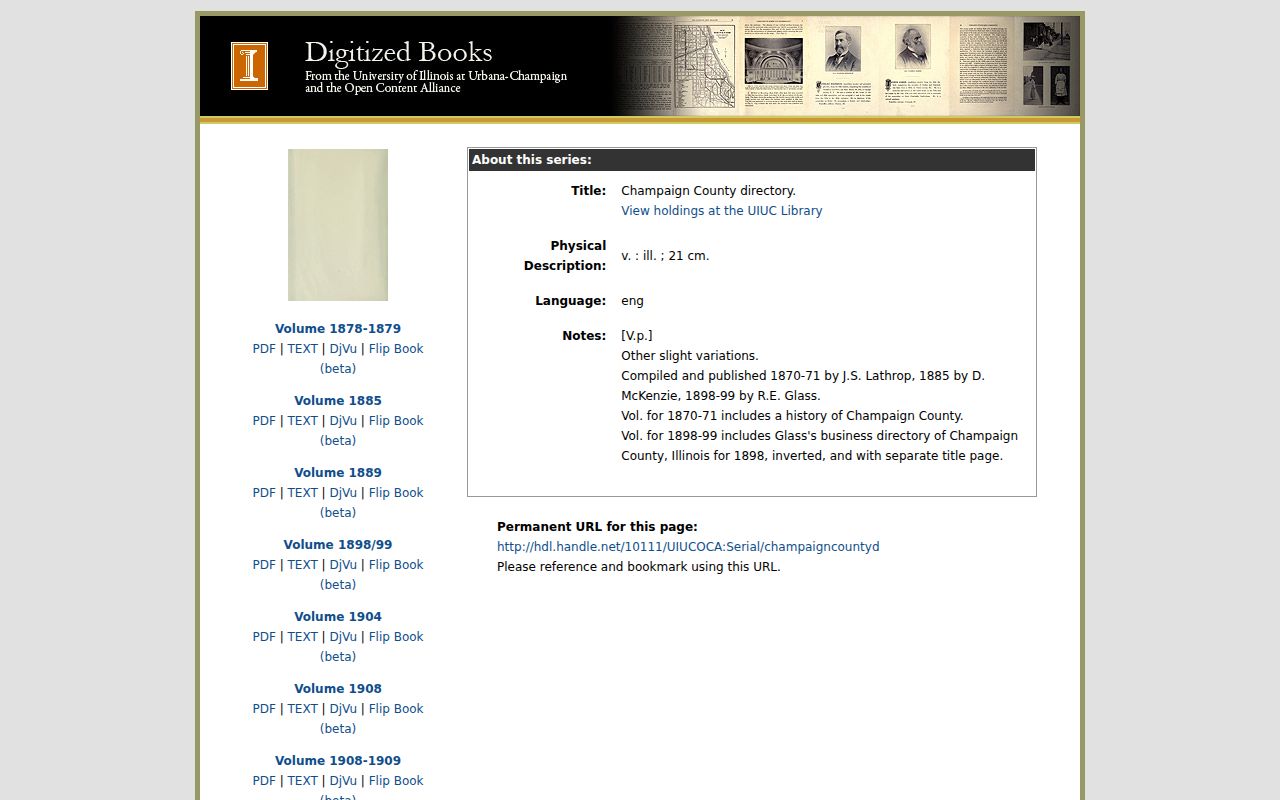
The collection view shows why the volume title and year belong in every research note. Save the page number and scan address too. Optical character recognition, or OCR, can mistake initials, apostrophes, and street numbers, so inspect the page image after a text hit.
Urbana's Champaign County Directories
The Urbana Free Library directory holdings support searches by person, address, occupation, business, church, fraternal group, and public office. The collection includes city, telephone, and criss-cross directories. A researcher can move from an alphabetical name entry to a street-order list, then compare nearby editions. This is also the best fallback when a scan is missing, faint, or poorly indexed.
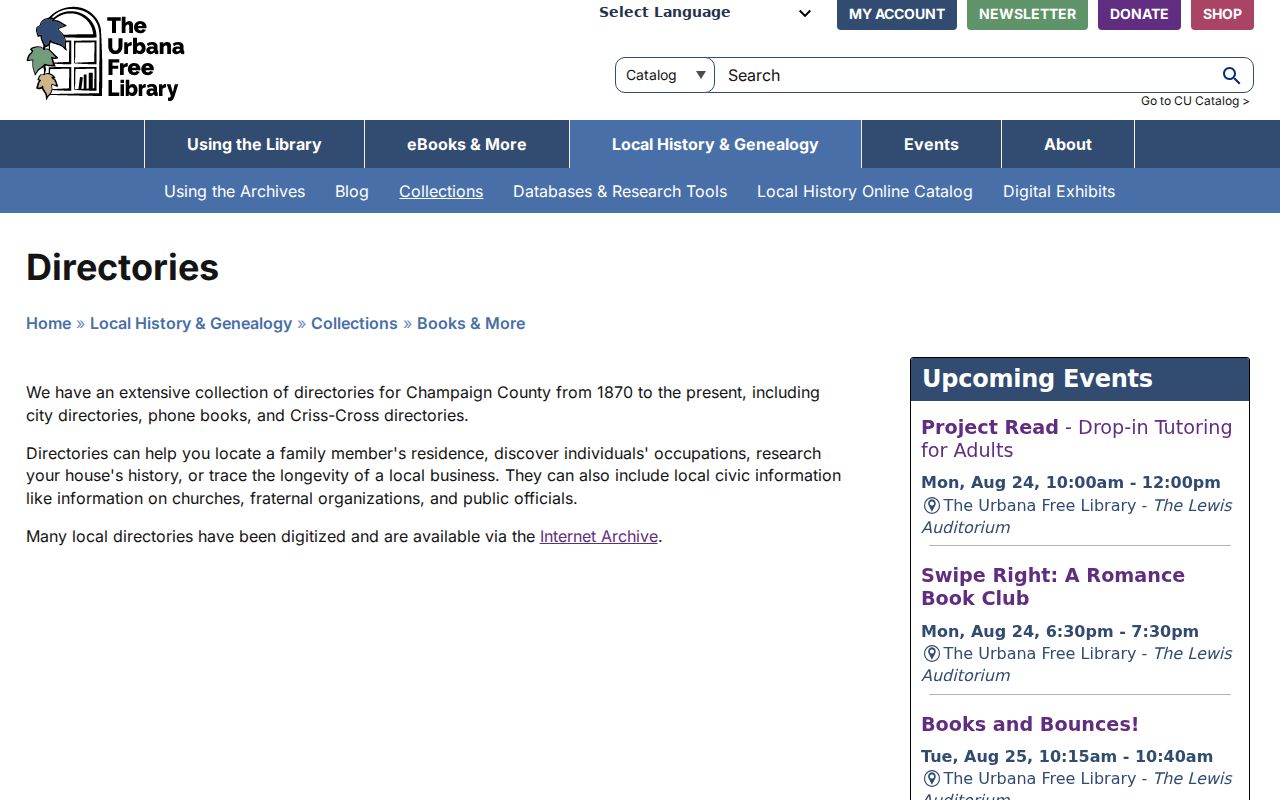
The library page makes the access split clear: some volumes are digitized, while local-history material may require staff help. Collections do not circulate, and special-collection retrieval can take up to 48 hours. Contact the archive with the town, surname, address, and year range before a visit.
Read a Champaign County Directory Entry
A Champaign County city directory entry is compact. The 1895-96 Hardie & Scharle volume, for example, lists Elizabeth Alward as a milliner at 206 W University Avenue and links L.A. Alward's millinery at 5 N Neil to the same home. Another entry identifies Mary Alsip as the widow of John at 203 E Hill. Those details can separate people who share a surname, but each fact belongs to that edition and date.
| Name | Surname, initials, given name, and sometimes spouse or widow notation |
|---|---|
| Work | Occupation, shop, employer, or business address when printed |
| Residence | House number, direction, street, or boarding notation |
| Context | Church, fraternal, public-office, or classified-business references in other sections |
| Citation | Directory title, compiler, edition year, page, and scan or shelf source |
- Criss-cross directory
- A later directory arranged by street and house number instead of surname.
- Householder index
- A list keyed to the person recorded as the household head, which may omit other people at the same home.
- Abbreviation key
- The volume's own code list for terms such as residence, boards, corner, near, and street directions.
Inside an Early Champaign Directory
The 1878-79 Chas. Emerson volume described more than an alphabetical roll. It carried a classified business directory, a street directory, and a gazetteer. The 1895-96 compiler said workers canvassed streets, alleys, and houses. That claim explains the book's aim, but it does not guarantee that every boarder, child, rural family, or newly arrived person appeared.
Read each section for a different question. The surname list links a person to a dated place. The business section can reveal a shop or trade. The street list shows nearby entries and can expose a numbering change. Keep period wording in the transcription, then add a separate modern note. Never silently change a term or address because it looks old.
| Directory milestone | What it adds |
|---|---|
| 1870 onward | Urbana Free Library's stated county coverage begins |
| 1878-79 | Resident, business, street, and gazetteer sections in the Emerson volume |
| 1895-96 | Detailed abbreviation key and street-canvass context |
| About 1878-1970 | Johnson's digitized regional directory span |
Newspapers Bridge Directory Gaps
The Urbana Free Library newspaper holdings reach from 1852 to the present, much of it on microfilm. Digitized titles include the Daily News, Daily Illini, Champaign County News, Urbana Daily Courier, St. Joseph Record, Twin City Review, and Banker Farmer. Search a surname with a street, spouse, business, church, township, or probate term.
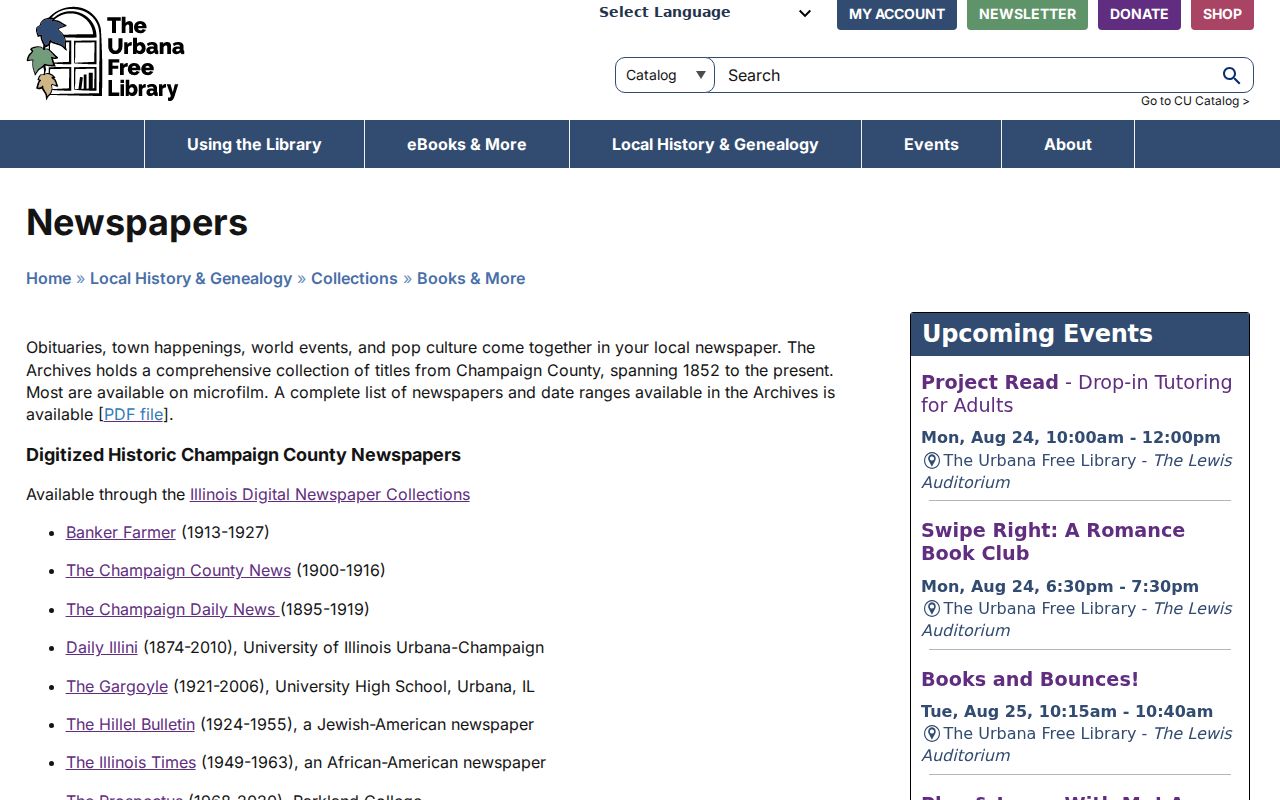
Newspaper text can fill a year missing from the directory shelf. It can also explain a move, marriage, death, business change, or legal notice. Treat the OCR hit as a lead. Open the image, note the paper and date, and confirm the person with another source.
Champaign County Archive Fallbacks
The Champaign County Historical Archives research room holds city directories, yearbooks, maps, photographs, ephemera, and people and family files. The research room at 102 E University Avenue in Champaign is open Wednesday 1 to 5, Thursday 1 to 7, Friday 1 to 5, and Saturday 10 to 5. Reservations are encouraged, and walk-ins may be denied.
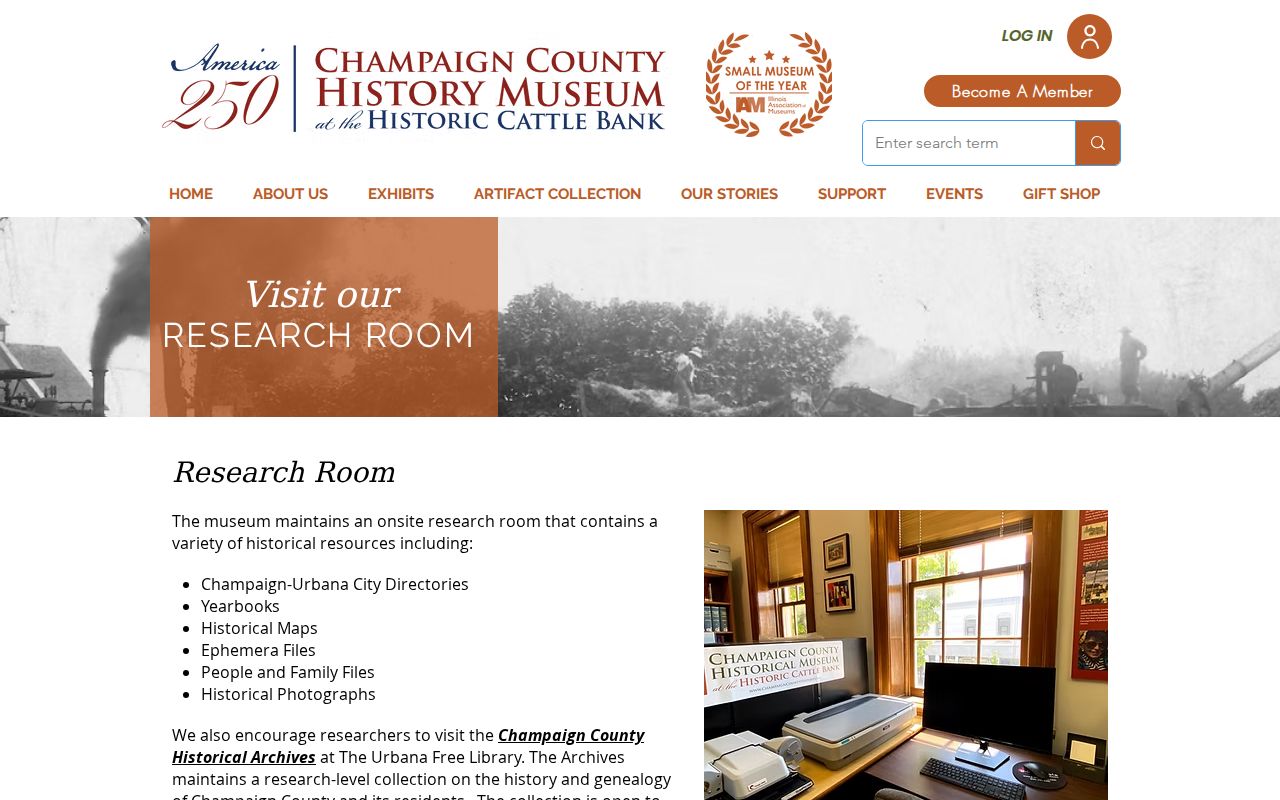
The archive screen is a reminder to request a narrow set before traveling. Give staff the town, date range, names, address variants, and type of item sought. For official county series, the Illinois Regional Archives Depository at Illinois State University is another path. FamilySearch catalogs and UIUC collections can supply images or finding aids, but access may vary by item.
Champaign Directory Address Changes
Old numbers can make a household seem to vanish. A historic survey for 207 W Washington Street in Urbana says the property was once 305 W Washington and changed around 1918 after Race Street moved half a block west. The survey compares directories, Sanborn maps, a PIN, and an owner and occupant chronology. That mix is stronger than a current-address search alone.
A separate local-history account describes 1911 to 1913 postal confusion and street changes west from the Urbana limits. It should be checked against an ordinance, map, deed, or original directory before use as fact. Search both numbers and all city labels. Historical volumes may use Urbana, West Urbana, Champaign, East Urbana, or a township name.
Trace Family in Champaign City Directories
Use consecutive Champaign County city directories to build a dated trail, then pair that trail with census, newspaper, cemetery, probate, and property sources. Keep possible same-name people separate until an address, spouse, workplace, or family link resolves them.
- Search the surname, initials, spouse, street, and business in one likely year. Save the exact entry and page image.
- Check the year before and after. Record each move, new occupation, widow notation, and alternate spelling.
- Use the street-order or criss-cross section when available. It can show the address under a different name or number.
- Pair the sequence with federal census years and newspapers. Directories can fill the years between census snapshots.
- Close the trail with death, probate, cemetery, marriage, title, or deed evidence from the proper custodian.
A disappearance has several meanings: the person moved, died, was omitted, used a different name, or fell into a missing volume. Record it as “not found in this edition,” not as proof of an event. For a modern check after a historical find, use the county's official records and the Champaign County resident lookup with care.